



A medically grounded guide to laser resurfacing, technologies, and treatment selection in Sydney.
Laser resurfacing is one of the most effective approaches for improving skin quality, commonly used to address pigmentation, uneven texture, acne scarring, and fine lines.
Despite its widespread use, it remains a frequently misunderstood area of aesthetic medicine.
The term “laser resurfacing” encompasses a spectrum of treatments that vary in depth, intensity, and outcomes. Two individuals undergoing “laser” treatments may have entirely different experiences depending on the technology used, treatment parameters, and the clinical reasoning guiding the approach.
This guide has been developed by Dr Stephen Lowe, a Sydney-based cosmetic physician involved in both the clinical application and education of energy-based treatments. It provides a clear, medically grounded overview of laser resurfacing — outlining how these treatments work, the differences between technologies, and how to approach treatment selection in a way that prioritises both outcomes and long-term skin integrity.
What Is Laser Resurfacing?
Laser resurfacing refers to a group of energy-based treatments designed to improve skin quality through controlled thermal stimulation. While the term is often used broadly, it encompasses a spectrum of technologies that differ in how they interact with the skin, the depth they reach, and the biological response they produce.
At its core, laser resurfacing is not simply about removing layers of skin, but about stimulating structured regeneration.
When energy is delivered into the skin, it creates precise zones of controlled thermal injury. This initiates a cascade of biological processes, including:
- Activation of fibroblasts (the cells responsible for collagen production)
- Increased synthesis of collagen and elastin
- Reorganisation of existing collagen fibres
- Acceleration of epidermal turnover
Over time, these processes contribute to improvements in skin texture, tone, and overall structural integrity, forming the basis of how resurfacing treatments achieve meaningful, progressive change.
In clinical practice, the goal of resurfacing is not to maximise treatment intensity, but to induce an appropriate level of biological response. Overly aggressive treatments can increase risk without necessarily improving outcomes, particularly when more measured approaches can achieve comparable results over time.
Understanding how laser resurfacing works provides a foundation, but equally important is recognising that not all treatments are the same.
Types of Laser Resurfacing
Laser resurfacing is not a single treatment, but a spectrum of approaches that vary in depth, intensity, and clinical purpose. Understanding this spectrum is essential, as different treatments are designed to address different concerns, with varying degrees of recovery and outcome.
In clinical practice, the goal of resurfacing is not to maximise treatment intensity, but to induce an appropriate level of biological response. Overly aggressive treatments can increase risk without necessarily improving outcomes, particularly when more measured approaches can achieve comparable results over time.
In clinical practice, resurfacing treatments are broadly categorised into light, medium, and deep approaches. Each occupies a distinct role within a treatment plan.
Light Resurfacing (Maintenance and Early Intervention)
Light resurfacing treatments are designed to improve early signs of skin change and maintain overall skin quality. These treatments typically use non-ablative technologies, meaning the surface of the skin remains intact while energy is delivered into the deeper layers.
Common examples include broadband light (BBL) and non-ablative fractional lasers. These treatments work by gently stimulating collagen production and improving skin clarity without significant disruption to the epidermis.
Light resurfacing is most effective for:
- Mild pigmentation and sun damage
- Diffuse redness and vascular irregularities
- Early changes in skin texture
- General skin dullness
Rather than producing dramatic results in a single session, these treatments are usually performed as a series, with gradual and cumulative improvement over time.
They are particularly suited to individuals seeking minimal downtime or those focused on prevention and long-term skin maintenance. However, their limitations should be recognised. Light resurfacing does not typically produce meaningful changes in deeper wrinkles, significant laxity, or established acne scarring.
Medium Resurfacing (Balanced Correction)
Medium-depth resurfacing treatments provide a balance between results and recovery. They are designed to penetrate deeper into the skin than light treatments, producing more noticeable improvements while maintaining a manageable downtime.
These treatments are commonly performed using fractional laser technologies, which deliver energy in a controlled, grid-like pattern. This allows for targeted treatment of the skin while preserving surrounding tissue, supporting faster healing.
Medium resurfacing is typically used to address:
- Moderate pigmentation
- Early to moderate textural irregularities
- Fine lines
- Mild acne scarring
Recovery is usually short but noticeable, often involving redness, mild swelling, and a temporary change in skin texture over several days.
Clinically, these treatments are often used when lighter approaches have not achieved sufficient improvement, or when a patient is seeking more visible results without committing to deeper resurfacing. In many cases, they form part of a staged treatment strategy, allowing for progressive improvement over time.
Deep Resurfacing (Advanced Structural Treatments)
Deep resurfacing treatments are designed to address more advanced skin concerns and produce more significant structural change. These treatments typically use ablative laser technologies, which remove microscopic portions of the skin while delivering thermal energy into deeper layers.
This approach stimulates a more substantial collagen response and allows for meaningful improvement in skin structure.
Deep resurfacing is most effective for:
- Moderate to severe acne scarring
- Established wrinkles and textural changes
- Significant photodamage
- Areas of uneven or thickened skin
Because these treatments reach deeper into the dermis, they require a more structured recovery period. This may include several days of downtime, followed by gradual healing and ongoing collagen remodelling over the months that follow.
Importantly, deeper treatments are not inherently “better.” Their role is to address specific indications where lighter approaches are unlikely to be effective. Careful patient selection and treatment planning are essential to balance outcomes with safety.
Ablative vs Non-Ablative Approaches
Another important distinction within resurfacing is between ablative and non-ablative treatments.
- Non-ablative treatments heat the deeper layers of the skin while leaving the surface intact. They offer lower downtime and a favourable safety profile but produce more gradual results.
- Ablative treatments remove or disrupt portions of the skin’s surface, allowing for deeper penetration and more significant structural change. These treatments typically involve greater downtime and require more careful aftercare.
Modern resurfacing often combines these approaches, either within a single treatment or across a treatment plan, to achieve balanced outcomes.
A Clinical Perspective on Treatment Selection
A common misconception is that more aggressive treatments produce better results. In reality, the effectiveness of a treatment depends on how well it is matched to the underlying condition.
In clinical practice, treatment selection is guided by:
- The depth and severity of the concern
- Skin type and healing capacity
- Tolerance for downtime
- Long-term treatment goals
In many cases, a combination of approaches — delivered over time — provides more consistent and sustainable outcomes than a single intensive treatment.
Laser resurfacing should therefore be understood not as a fixed procedure, but as a flexible set of tools that can be tailored to the individual, with the aim of improving skin quality in a measured and considered way.
These categories are delivered through a range of technologies, each designed to target different layers of the skin.
Laser Technologies Explained
Laser resurfacing is delivered through a range of technologies, each designed to target different layers of the skin and address specific clinical concerns. While device names are often emphasised, outcomes are determined less by the technology itself and more by how it is applied.
In practice, the role of technology is to enable precise delivery of energy—in terms of depth, density, and thermal effect—so that treatment can be tailored to the individual.
Advances in laser and light-based technologies continue to shape how treatments are delivered, particularly in the context of combination therapies and long-term skin maintenance. These principles are reflected in ongoing clinical education and presentations at both Australian and international meetings, where evolving treatment strategies — including BBL protocols, combination approaches, and the role of emerging technologies — are discussed.
Broadband Light (BBL)
Broadband Light (BBL) is a light-based technology rather than a traditional laser, commonly used within resurfacing strategies for its ability to improve overall skin tone and clarity.
BBL works by delivering pulses of light that are selectively absorbed by:
- Melanin (pigment)
- Haemoglobin (vascular structures)
This allows it to address:
- Sun damage and uneven pigmentation
- Diffuse redness
- General skin discolouration
Clinically, BBL is often used for surface-level correction and maintenance, and may be incorporated into broader treatment plans to optimise skin clarity prior to other interventions.
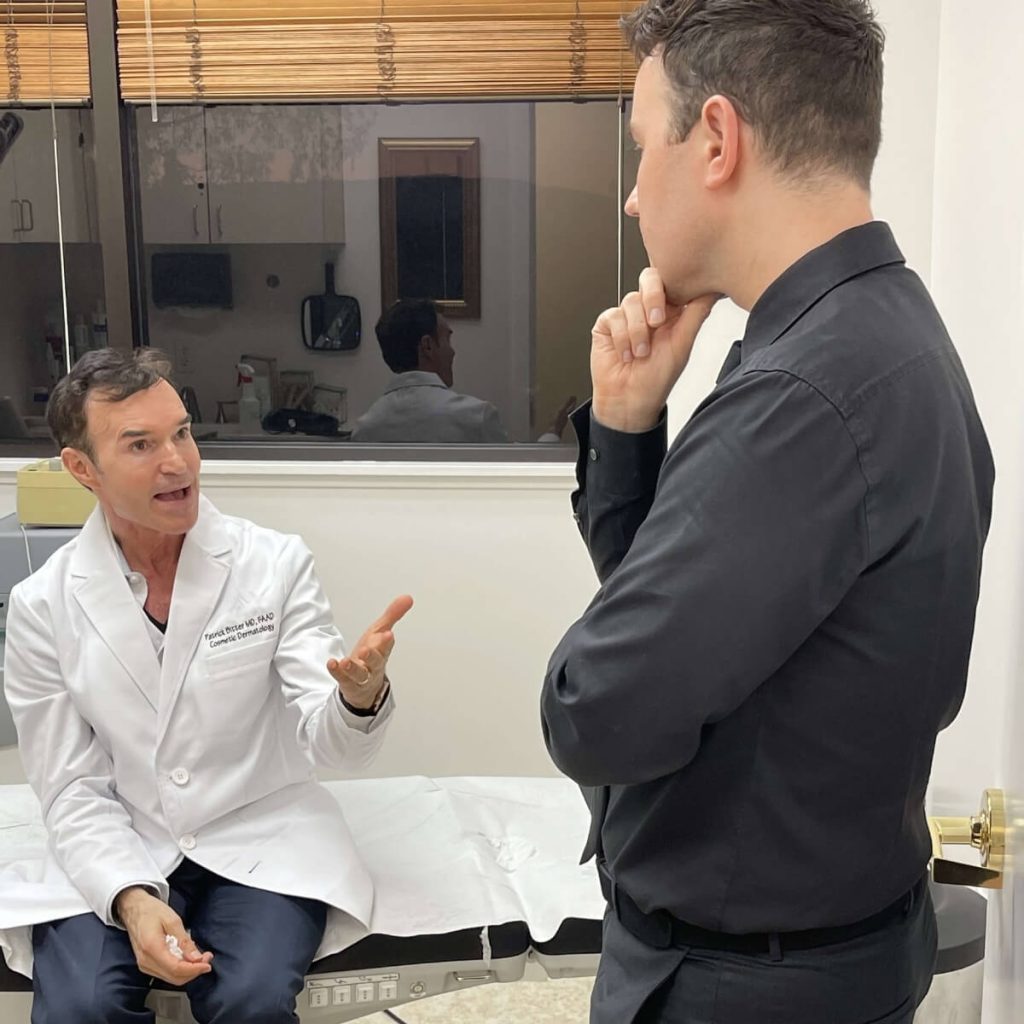
BBL is also of interest from a preventative and long-term skin health perspective. Research led by Dr Patrick Bitter at Stanford University demonstrated that patients undergoing regular treatments over an extended period showed improvements in skin appearance consistent with a reversal of visible ageing.
This work highlights the potential for light-based treatments not only to correct existing concerns, but to influence the biological processes associated with skin ageing. Dr Stephen Lowe has undertaken training with Dr Bitter and incorporates similar principles into clinical practice, particularly in the context of long-term skin maintenance.
Non-Ablative Fractional Lasers (e.g. MOXI)
Non-ablative fractional lasers create microscopic zones of thermal injury within the skin while leaving the surface intact. This stimulates collagen production without significant disruption to the epidermis.
These technologies are typically used for:
- Early signs of ageing
- Mild pigmentation
- Preventative or maintenance treatments
Because the skin barrier remains largely intact, recovery is minimal and treatments can be performed with little interruption to daily activities. Results are gradual and often achieved through a series of sessions.
Hybrid Fractional Lasers (e.g. Halo)
Hybrid fractional lasers combine both ablative and non-ablative wavelengths within a single treatment. This allows for simultaneous treatment of:
- Superficial skin layers (for tone and clarity)
- Deeper dermal layers (for collagen stimulation)
This dual approach provides a balance between results and downtime.
Clinically, hybrid treatments are often used for:
- Moderate pigmentation
- Early to moderate textural changes
- Fine lines
Recovery is typically more noticeable than with non-ablative treatments but less intensive than fully ablative resurfacing.
Ablative Resurfacing Technologies (e.g. Contour TRL)
Ablative technologies are designed to remove or vaporise microscopic portions of the skin while delivering thermal energy into deeper layers.
This approach enables:
- More significant collagen remodelling
- Structural improvement in the skin
- Greater impact on texture and scarring
Technologies such as Contour TRL allow for a high degree of control over:
- Depth of treatment
- Density of coverage
- Degree of thermal effect
This flexibility allows treatments to be tailored to specific areas and concerns, rather than applying a uniform approach.
Ablative resurfacing is typically reserved for:
- Advanced textural changes
- Acne scarring
- Deeper lines and wrinkles
Fractional Ablative Technologies (e.g. ProFractional)
Fractional ablative treatments create microscopic channels within the skin, leaving surrounding tissue intact to support faster healing.
This approach offers:
- Targeted treatment of deeper layers
- Controlled downtime
- The ability to treat specific areas without fully resurfacing the entire skin surface
These treatments are commonly used for:
- Acne scarring
- Localised textural concerns
- Areas requiring more focused intervention
Technology as a Tool, Not a Solution
While each technology has a distinct role, no single device is appropriate for all patients or all conditions.
In many cases, optimal outcomes are achieved by:
- Combining different technologies
- Staging treatments over time
- Adjusting the approach based on skin response
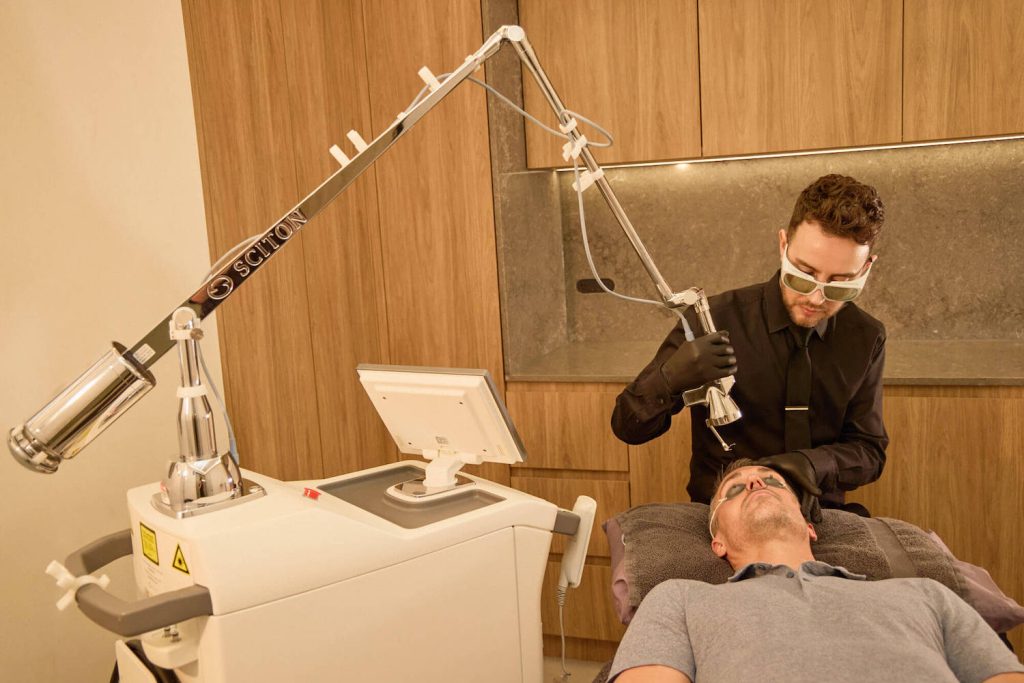
Modern platforms, including systems such as Sciton, are designed to support this flexibility—allowing multiple modalities to be used within a single, cohesive treatment strategy.
From a clinical perspective, the focus remains on selecting the most appropriate method of treatment, rather than the device itself, ensuring that outcomes are guided by the condition being treated and the long-term health of the skin.
With this in mind, laser resurfacing can be applied across a range of clinical concerns.
What Can Laser Resurfacing Treat?
Laser resurfacing is a versatile approach used to address a range of skin concerns. However, it is not a single-purpose treatment, and its role varies depending on the condition being treated.
Understanding what laser resurfacing can — and cannot — address is essential in selecting an appropriate treatment strategy.
Acne Scarring
Acne scarring is a common indication for laser resurfacing, resulting from disruption to the skin’s normal structure during periods of inflammation.
Laser treatments can improve:
- Skin texture
- Shallow to moderate scarring
- Overall skin thickness and quality
By stimulating collagen production, resurfacing helps to gradually remodel the skin.
However, outcomes depend on scar type. Rolling scars and shallow boxcar scars typically respond well, while deeper scars may require combination approaches. In many cases, laser resurfacing forms part of a broader treatment plan rather than a standalone solution.
In cases of acne scarring, treatment strategies are often tailored based on scar type, skin quality, and underlying structural changes, with further detail available in our acne scarring treatments in Sydney.
Pigmentation and Sun Damage
Laser and light-based treatments are commonly used to improve uneven skin tone caused by sun exposure or inflammation.
These treatments can:
- Reduce sunspots and pigmentation
- Improve overall skin clarity
- Create a more even skin tone
Technologies such as light-based devices target melanin within the skin, allowing pigment to be gradually broken down and cleared.
Advances in laser and light-based technologies continue to shape how treatments are delivered, particularly in the context of combination therapies and long-term skin maintenance. These principles are reflected in ongoing clinical education and presentations at both Australian and international meetings, where evolving treatment strategies — including BBL protocols, combination approaches, and the role of emerging technologies — are discussed.
Treatment selection depends on factors such as skin type and pigment depth. A measured approach is often required to minimise the risk of post-inflammatory pigmentation, particularly in more reactive skin types.
For concerns related to uneven skin tone and discolouration, a more detailed clinical overview is available in our approach to pigmentation treatments.
Redness and Vascular Concerns
Certain technologies are designed to address vascular components within the skin, including:
- Diffuse redness
- Visible capillaries
- Inflammatory skin conditions
These treatments work by targeting haemoglobin within blood vessels, leading to gradual reduction in redness and improved skin clarity.
Multiple sessions are often required, and treatments may be combined with other modalities depending on the underlying cause.
Texture, Pores, and Fine Lines
Laser resurfacing is frequently used to improve surface irregularities associated with ageing and sun damage.
This includes:
- Rough or uneven skin texture
- Enlarged pores
- Fine lines
The degree of improvement depends on treatment depth. Lighter treatments refine surface texture, while deeper approaches are required for more significant structural change.
A Broader Perspective
Many skin concerns do not exist in isolation. For example:
- Acne scarring may coexist with pigmentation
- Sun damage may involve both pigment and vascular changes
- Texture changes often accompany fine lines
For this reason, laser resurfacing is often used as part of a combined treatment strategy, rather than a single intervention.
A considered approach involves identifying the primary concern, then selecting and sequencing treatments to achieve balanced, progressive improvement over time.
With this in mind, laser resurfacing can be applied across a range of clinical concerns.
How to Choose the Right Approach
Selecting the most appropriate laser resurfacing treatment is not simply a matter of choosing a device. It requires an understanding of the underlying skin concern, the degree of structural change required, and how different approaches can be used to achieve a balanced outcome.
In some cases, treatment planning may also involve non-surgical skin tightening treatments to support skin quality and tissue support over time.
One of the most common misconceptions is that more intensive treatments produce better results. In practice, this is not always the case.
The most effective treatment is not the most aggressive — it is the most appropriate.
Understanding the Primary Concern
The first step in treatment planning is identifying what is driving the concern.
For example:
- Pigmentation may result from sun damage, inflammation, or hormonal factors
- Acne scarring may involve both surface irregularities and deeper structural changes
- Redness may be vascular in origin or related to skin sensitivity
Each requires a different approach. Attempting to treat multiple concerns with a single modality can lead to suboptimal outcomes. Instead, treatment planning should prioritise the primary issue, with additional concerns addressed over time.
Assessing Depth and Severity
Not all skin concerns exist at the same depth.
- Superficial concerns often respond to lighter treatments
- Mid-level changes may require fractional resurfacing
- Deeper structural changes require more advanced approaches
Matching treatment depth to the condition is critical. Treatments that are too superficial may be ineffective, while unnecessarily aggressive treatments can increase risk without improving outcomes.
Balancing Results and Downtime
Treatment selection must also consider recovery.
- Lighter treatments offer minimal downtime with gradual results
- Medium treatments provide more visible change with short recovery
- Deeper treatments deliver greater structural improvement but require more downtime
In many cases, patients prefer a series of lower-downtime treatments rather than a single intensive procedure.
A Structured, Staged Approach
In clinical practice, a staged approach is often more effective than a single intervention.
This may involve:
- Addressing surface concerns such as pigmentation or inflammation
- Introducing resurfacing to improve texture
- Using deeper treatments selectively where required
This approach allows for more controlled outcomes, reduced risk, and improved long-term skin quality.
The role of combination therapies has become increasingly important in aesthetic medicine, with treatment strategies evolving beyond single-device approaches. Rather than relying on a single treatment, different modalities are integrated over time to achieve more balanced and sustainable results.
In clinical practice, a staged approach is often more effective than a single intervention. This approach reflects a broader shift in clinical practice, where treatment planning is guided by long-term outcomes rather than isolated interventions.
Clinical Perspective
As a cosmetic physician, Dr Stephen Lowe approaches laser resurfacing with an emphasis on precision rather than intensity.
Treatment decisions are guided by the condition being treated, the patient’s skin characteristics, and long-term outcomes — ensuring that results are not only effective, but appropriate and sustainable.
Alongside treatment selection, recovery plays a central role in determining both safety and outcome.
Recovery, Risks, and Expectations
Laser resurfacing involves a period of recovery, the extent of which depends on the depth and intensity of treatment. Understanding this process is essential in setting appropriate expectations and achieving a consistent outcome.
Recovery varies across the treatment spectrum:
- Light treatments typically involve mild redness or sensitivity, resolving within hours to a few days
- Medium-depth treatments may result in several days of redness, dryness, or a temporary change in skin texture
- Deeper resurfacing requires a more structured recovery period, often involving visible downtime, peeling, and gradual healing over one to two weeks
Recovery should be considered an integral part of treatment planning. In many cases, outcomes are improved not by increasing treatment intensity, but by selecting an approach that aligns with the skin’s capacity to heal in a controlled and predictable way.
Beyond the initial recovery, the skin continues to remodel over several months as collagen production increases and reorganises.
Potential Risks
While generally safe when performed appropriately, laser resurfacing carries potential risks, including:
- Post-inflammatory pigmentation
- Prolonged redness
- Infection or delayed healing
These risks are influenced by treatment selection, skin type, and adherence to aftercare.
A Considered Approach
Recovery is not separate from the treatment — it is central to the outcome. A measured approach, with appropriate treatment selection and structured aftercare, supports both safety and long-term results.
As a cosmetic physician, Dr Stephen Lowe places emphasis on aligning treatment intensity with the individual’s skin and capacity for recovery, ensuring outcomes are achieved in a controlled and predictable way.
Why Clinical Expertise Matters
Laser resurfacing is not a standardised treatment. While the technologies used are advanced, outcomes depend heavily on how they are applied. The same device can produce very different results depending on treatment depth, energy delivery, and the clinical reasoning guiding the approach.
For this reason, laser resurfacing should be considered a clinically directed process, rather than a fixed procedure.
Much of the discussion around laser treatments focuses on devices. However, the technology itself does not determine the outcome — the clinical approach does.
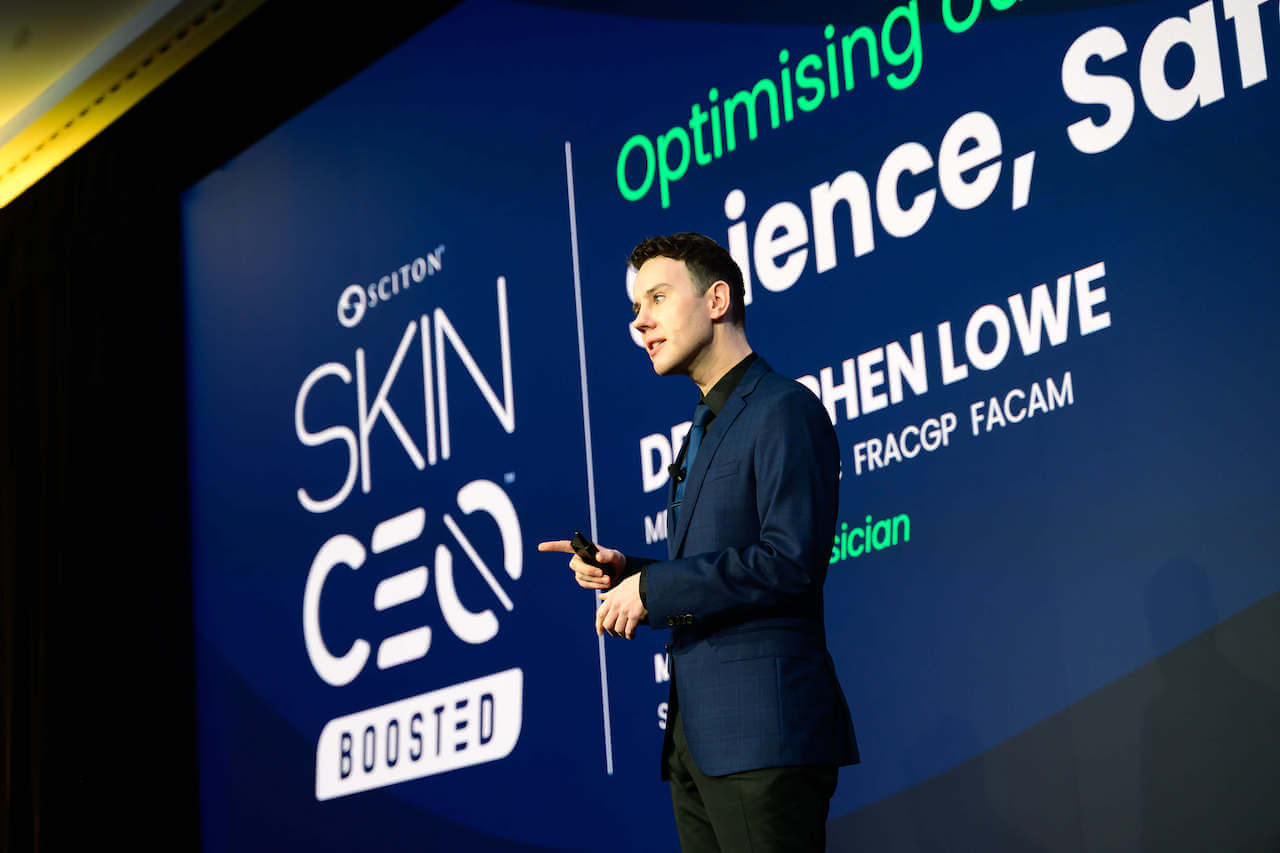
As a cosmetic physician, Dr Stephen Lowe is involved in both clinical practice and the education of other practitioners in energy-based treatments, including ongoing work as a Key Opinion Leader with Sciton. This includes presenting on topics such as combination therapies, BBL protocols, and treatment approaches across different skin types at both Australian and international meetings.
This perspective informs a measured, evidence-based approach to laser resurfacing — focused on precision, restraint, and long-term outcomes. Rather than pursuing intensity alone, treatment is guided by what is appropriate for the individual, ensuring results that are not only effective, but consistent and sustainable over time.
Beyond the Technology
Much of the discussion around laser treatments focuses on devices. However:
The technology itself does not determine the outcome — the clinical approach does.
Effective treatment requires:
- Understanding of skin anatomy and healing responses
- Accurate assessment of the condition being treated
- Selection of appropriate depth and intensity
- Judgement in when to treat, and when not to
An Individualised Approach
No two patients present with identical skin characteristics. Factors such as skin thickness, sun damage, and sensitivity influence both treatment selection and outcome.
A considered approach involves tailoring treatment to the individual, often using staged or combination strategies to achieve more balanced and sustainable results, particularly when delivered within a framework of laser resurfacing performed in a clinical setting.
Alongside treatment selection, recovery plays a central role in determining both safety and outcome.
Clinical Perspective
As a cosmetic physician, Dr Stephen Lowe is involved in both clinical practice and the education of other practitioners in energy-based treatments, including ongoing work with advanced laser and light-based technologies. This experience informs a measured, evidence-based approach to laser resurfacing, focused on precision, safety, and long-term skin health rather than intensity alone.
Laser resurfacing can be a highly effective tool when applied appropriately. However, it is not a one-size-fits-all solution.
A considered approach — based on accurate assessment, appropriate treatment selection, and an understanding of long-term skin behaviour — is central to achieving consistent and sustainable outcomes.
For individuals considering treatment, the first step is a comprehensive consultation to determine the most appropriate approach based on their skin and goals.

 muse@museclinic.com.au
 Get Directions