



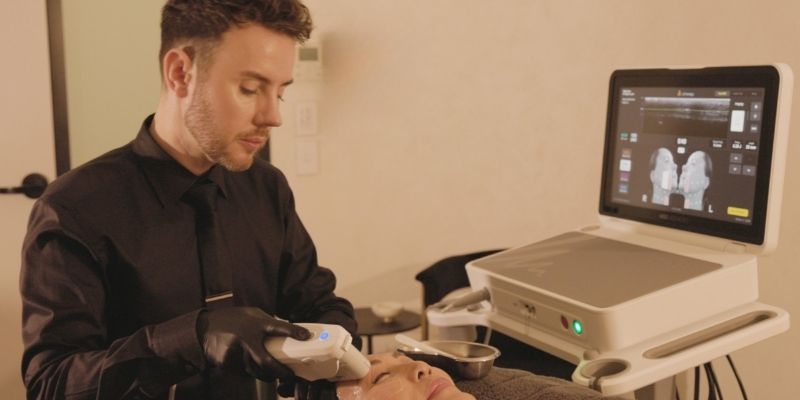
Ultherapy is widely recognised as one of the most established non-surgical approaches to tissue lifting and skin tightening. However, a common question patients ask is whether Ultherapy is worth it, particularly when considering treatment options in Sydney.
The answer depends less on the device itself, and more on how it is applied, who it is appropriate for, and what outcomes are realistically expected.
Understanding What Ultherapy Does
Ultherapy uses micro-focused ultrasound with visualisation to deliver energy at specific depths beneath the skin. This stimulates collagen production within deeper structural layers, supporting gradual lifting and improved skin firmness over time.
Unlike superficial treatments, its effects are not immediate. Instead, outcomes develop progressively over several months as collagen is remodelled.
From a clinical perspective, this distinction is important. Ultherapy is not designed to produce rapid or dramatic change, but rather to support subtle, natural improvements in skin quality and structural support.
When Ultherapy Is Worth It in Sydney
Ultherapy can be a valuable treatment when used in the right clinical context, never more so now that with the advancements of the new Ultherapy PRIME.
It is generally most appropriate for patients with mild to moderate skin laxity who are seeking gradual improvement without surgery. It can also play a role in maintaining skin firmness over time, particularly when integrated into a broader treatment strategy.
In these cases, outcomes are often more predictable and aligned with patient expectations.
When Ultherapy May Be Less Effective
Ultherapy may be less effective in cases where skin laxity is more advanced, or where volume loss is a primary contributor to facial ageing.
In these situations, relying on a single treatment modality may lead to suboptimal results. A more comprehensive approach, incorporating different treatment strategies, is often required to achieve meaningful improvement.
This highlights an important point: the success of Ultherapy is not determined by the device alone, but by appropriate patient selection and treatment planning.
Why Results Can Vary
Variability in outcomes is one of the most common concerns associated with Ultherapy.
This is often related to differences in:
Anatomical structure
Skin thickness and tissue quality
Treatment technique and energy delivery
The presence or absence of real-time visualisation
As such, outcomes are highly dependent on the clinical approach taken.
This is explored in more detail in Why Ultherapy outcomes vary.
The Role of Experience
Ultherapy is a technique-dependent treatment.
While the technology provides the capability to deliver energy at specific depths, it is the practitioner’s understanding of anatomy, treatment planning, and execution that determines how effectively this is achieved.
Experience plays a significant role in:
Selecting appropriate treatment depths
Designing treatment vectors
Ensuring consistent energy delivery
Avoiding anatomical risk areas
For this reason, the same device can produce different outcomes depending on how it is used.
A More Considered Perspective
Rather than asking whether Ultherapy is “worth it” in isolation, it is more appropriate to consider whether it is suitable within the context of an individual treatment plan.
When used appropriately, it can contribute to improved skin firmness, structural support, and long-term skin quality.
However, it is rarely a standalone solution.
In many cases, it forms part of a broader approach to treatment, where multiple modalities are used in a staged and considered way to achieve balanced, natural outcomes.
For patients considering Ultherapy, treatments are performed at Muse Clinic in Sydney, where these approaches are applied within a structured and evidence-based clinical framework.
Conclusion
Ultherapy can be a worthwhile treatment when applied within the right clinical framework, and more so now with the developments of Ultherapy PRIME.
Its value lies not in immediate results, but in its ability to support gradual, biologically driven improvements in skin quality and structure.
For patients considering Ultherapy, outcomes are best achieved when treatment is guided by anatomical understanding, appropriate patient selection, and a long-term approach to aesthetic care.
For a deeper clinical perspective, see Dr Lowe’s role as an Ultherapy Key Opinion Leader.
Frequently Asked Questions
Is Ultherapy worth it for everyone?
Ultherapy is not suitable for all patients. It is generally most effective for those with mild to moderate skin laxity and may be less effective in more advanced cases.
How long does it take to see results from Ultherapy?
Results typically develop gradually over several months as collagen is remodelled within the skin.
Is Ultherapy a one-off treatment?
Ultherapy is often part of a longer-term treatment strategy and may be combined with other approaches depending on individual needs.

 muse@museclinic.com.au
 Get Directions